News

25 Sep 2025 - How are active ETFs reshaping the European investment market?
|
Sustainable equities outlook: AI's transformative role in an evolving global economy Janus Henderson Investors September 2025 In research commissioned by Janus Henderson in mid-2025, 42% of professional investors -- collectively managing around US$800 billion -- indicated they expect the European active ETF market could grow toward US$1 trillion by 2030. How fast is the European active ETF market likely to grow?The European active ETF market surged past US$70 billion in assets under management this summer, more than doubling in size since the start of 2024. Active ETFs still only make up 2.7% of the European ETF market, but 74% of professional investors expect this share to hit 5% by the end of next year. Globally, the pace of growth in the active ETF sector is striking. In the first half of 2025, half of all ETFs launched globally were active according to industry consultancy ETFGI. Looking ahead, nearly 60% of survey respondents expect most ETF launches in 2026 to be active.
Why are "active core" ETFs proving popular?So far, adoption in Europe has been led by "active core" ETFs, which have a low tracking error to a benchmark and often focus on research enhanced index-based strategies. Most of the investors surveyed (72%) see these ETFs as replacement for their existing index-based passive exposures. In contrast, uptake of "high-conviction active" ETFs, built on deep fundamental research to develop more concentrated portfolios, has so far been slower. However, 66% of respondents see high conviction active ETFs as potential replacements for traditional mutual fund exposures, suggesting significant runway for growth. How are investor allocations to active ETFs evolving?When survey respondents were asked how they see fund allocations to active ETFs changing over the next 12 months, the vast majority (96%) noted that these will increase by between 25% to 75%. The anticipated increases suggest growing confidence in active management strategies. These strategies seek to capitalise on the expertise of fund managers to navigate complex market environments and achieve superior risk-adjusted returns. This trend underscores the growing importance of active ETFs in modern investment portfolios. As investors continue to seek ways to optimize their portfolios, active ETFs are poised to play a pivotal role in their investment strategies over the coming year. Why do fixed income and equities lead asset exposure via active ETFs?A significant 80% of respondents reported having exposure to fixed income via active ETFs while 58% of respondents use active equity ETFs. The survey results underscore a strategic utilisation of active ETFs for achieving diversified investment portfolios. The prominence of fixed income indicates a strong inclination towards stability and income, while the engagement with alternatives (55%) suggests openness to innovative investment avenues. These insights can inform future asset management strategies and active ETF product offerings, aligning them with investor preferences and market dynamics. Why is it important to align ETF offerings with investor needs?The most dynamic innovation in the ETF space is on the active side. But unlocking the full potential will require products that closely align with what investors are seeking. We believe a well-designed suite of insight-led active ETFs, offering both core and high-conviction exposures, has the potential to bring the best of active management to investors with the efficiency and liquidity of the ETF structure. While growth expectations are strong, challenges remain. These include liquidity constraints in certain asset classes, potential tracking error, and whether high-conviction active strategies can consistently justify higher fees compared with passive or traditional active funds. Disclaimer: This article is based on information available as of mid-2025. The views expressed are those of the original author and do not necessarily reflect the views of FundMonitors.com. It is provided for educational purposes only and does not constitute investment advice. Investors should conduct their own research or seek professional advice before making investment decisions. |
|
Funds operated by this manager: Janus Henderson Australian Fixed Interest Fund , Janus Henderson Conservative Fixed Interest Fund , Janus Henderson Diversified Credit Fund , Janus Henderson Global Natural Resources Fund , Janus Henderson Tactical Income Fund , Janus Henderson Australian Fixed Interest Fund - Institutional , Janus Henderson Conservative Fixed Interest Fund - Institutional , Janus Henderson Cash Fund - Institutional , Janus Henderson Global Multi-Strategy Fund , Janus Henderson Global Sustainable Equity Fund , Janus Henderson Sustainable Credit Fund Source: Janus Henderson Investors commissioned the market research company Pureprofile to interview 100 professional investors working for pension funds, family offices, wealth managers, insurance asset managers in the UK, Germany, Switzerland, Italy, France, Sweden, Norway and Finland with a total of US$781.5 billion assets under management. The research was conducted in June 2025. Active investing: An investment management approach where a fund manager actively aims to outperform or beat a specific index or benchmark through research, analysis, and the investment choices they make. The opposite of passive investing. Exchange traded fund (ETF): A security that tracks an index, sector, commodity, or pool of assets (such as an index fund). ETFs trade like an equity on a stock exchange and experience price changes as the underlying assets move up and down in price. ETFs typically have higher daily liquidity and lower fees than actively-managed funds All opinions and estimates in this information are subject to change without notice and are the views of the author at the time of publication. Janus Henderson is not under any obligation to update this information to the extent that it is or becomes out of date or incorrect. The information herein shall not in any way constitute advice or an invitation to invest. It is solely for information purposes and subject to change without notice. This information does not purport to be a comprehensive statement or description of any markets or securities referred to within. Any references to individual securities do not constitute a securities recommendation. Past performance is not indicative of future performance. The value of an investment and the income from it can fall as well as rise and you may not get back the amount originally invested. Whilst Janus Henderson believe that the information is correct at the date of publication, no warranty or representation is given to this effect and no responsibility can be accepted by Janus Henderson to any end users for any action taken on the basis of this information. |

24 Sep 2025 - Performance Report: Equitable Investors Dragonfly Fund
[Current Manager Report if available]

24 Sep 2025 - Investment Perspectives: Riding the silver tsunami

23 Sep 2025 - Performance Report: Skerryvore Global Emerging Markets All-Cap Equity Fund
[Current Manager Report if available]

23 Sep 2025 - Australian Secure Capital Fund - Market Update
|
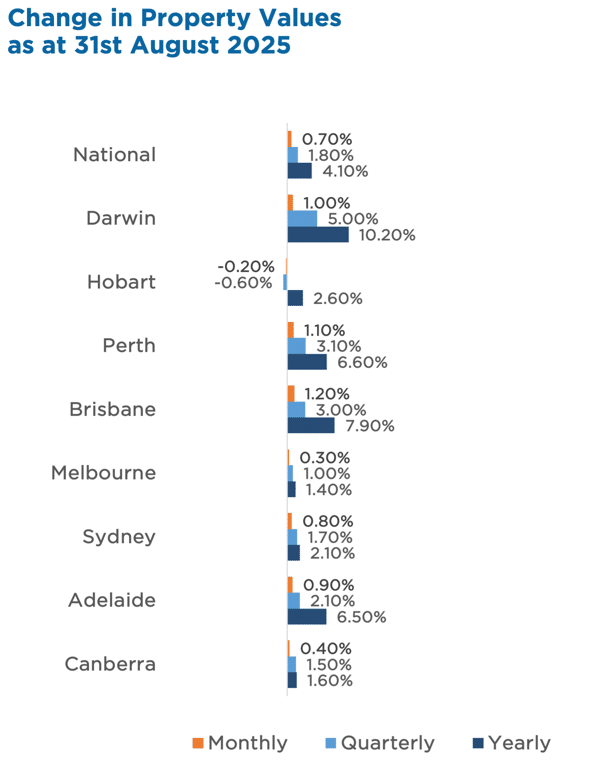
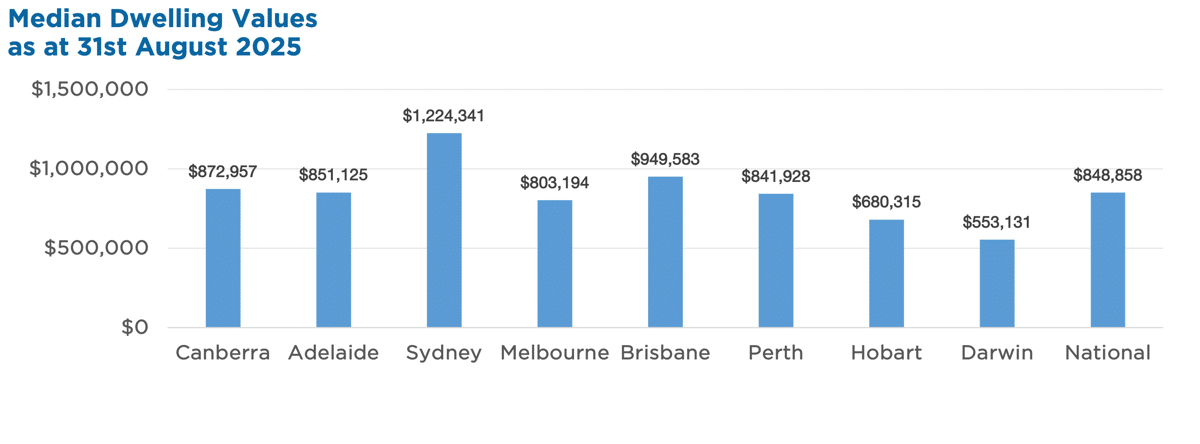
Australian Secure Capital Fund - Market Update Australian Secure Capital Fund September 2025 Australia's housing market extended its run in August, with values up 0.7%. This is strongest monthly gain since May 2024. Annual growth now sits at 4.1%. Tight supply (listings 20% below average) and strong buyer demand pushed auction clearance rates to 70%. This is the highest since early 2024. Vendors are entering spring in a strong position, with low competition and broad-based price growth across the capitals. Highlights:
Property Values as at 31st of August 2025
|

22 Sep 2025 - Performance Report: DAFM Digital Income Fund (Digital Income Class)
[Current Manager Report if available]

22 Sep 2025 - New Funds on Fundmonitors.com
|
New Funds on FundMonitors.com |
|
Below are some of the funds we've recently added to our database. Follow the links to view each fund's profile, where you'll have access to their offer documents, monthly reports, historical returns, performance analytics, rankings, research, platform availability, and news & insights. |
![]() |
||||||||||||||||||||||
| Arrowstreet Global Small Companies Fund | ||||||||||||||||||||||
|
||||||||||||||||||||||
| View Profile | ||||||||||||||||||||||
| Arrowstreet Global Equity Fund (Hedged) | ||||||||||||||||||||||
|
||||||||||||||||||||||
| View Profile | ||||||||||||||||||||||
| Arrowstreet Global Equity Fund | ||||||||||||||||||||||
|
||||||||||||||||||||||
| View Profile | ||||||||||||||||||||||
![]() |
||||||||||||||||||||||
| Allan Gray Australia Balanced Fund | ||||||||||||||||||||||
|
||||||||||||||||||||||
|
Want to see more funds? |
||||||||||||||||||||||
|
Subscribe for full access to these funds and over 900 others |

19 Sep 2025 - Hedge Clippings |19 September 2025
|
|
|
|
Hedge Clippings | 19 September 2025
Hedge Clippings - All about the Donald! The US Federal Reserve did what markets had been anticipating - and Donald Trump has been crying out for - cutting rates by 25 bps and flagging that two more are on the way. Trump will claim the credit no doubt, and his new FED appointee Stephen Miren - direct from his day job at the White House - voted against the move, instead arguing for a .50% cut. However, Jerome Powell stuck to his guns, and it went by the numbers, 11-1 in favour of 0.25%. The move came off the back of weaker employment numbers as job growth has slowed, partly due to Trump's immigration policy, and despite stronger inflation, which Powell described as "somewhat elevated". But the complication is tariffs. While Trump won't admit it, his trade barriers are acting as a tax on consumers, pushing up the cost of goods and feeding through to inflation. So, while the Fed is easing with one hand, they're fighting a tariff policy that is tightening the screws with the other. For investors, it's a case of celebrating cheaper money while simultaneously wondering what it says about the health of the US economy - and whether tariff-induced inflation could yet bite harder. Still on Trump, across the Atlantic, the UK was busy polishing the silverware for his visit to Windsor Castle. King Charles, who has seen his fair share of world leaders, rolled out a stunningly lavish welcome. The photo-ops were dutifully staged, but one can't help speculating what was said behind closed doors once the motorcade departed. Did Charles turn to Camilla and mutter, "Thank goodness that's over", or perhaps, "Best to count the cutlery." Sadly, we'll never know. Jokes aside, markets remain in the uncomfortable space between policy and politics. Rate cuts are meant to provide reassurance, but they also underline fragility. Trade barriers are meant to project strength, but they tend to hurt the very economies that impose them, and the people who voted for them. And while royal pageantry makes for colourful headlines, investors would do well to tune out the theatre. As we often say, "let the numbers do the talking". Right now, in the US those numbers point to an uneasy mix: slowing growth, stubborn inflation risks, and the hope that monetary stimulus buys enough time for the economy to adjust. Whether it does so depends less on the pomp at Windsor, and more on how long consumers and businesses can shoulder the contradictions of easy money, and expensive trade. What's next on the local front? Albo's off to New York, where he's hoping to have a more successful time persuading Donald to see his point of view than he did this week while trying to keep PNG and Vanuatu out of the clutches of Beijing. Hopefully (not that hope is a reliable strategy), Trump, fresh from Windsor, will still have his warm and fuzzy side on show. News | Insights New Funds on FundMonitors.com 10k Words | Equitable Investors Australian Equities Reporting Season Update | Airlie Funds Management August 2025 Performance News |
|
|
If you'd like to receive Hedge Clippings direct to your inbox each Friday |
19 Sep 2025 - Performance Report: Canopy Global Small & Mid Cap Fund
[Current Manager Report if available]

19 Sep 2025 - Why the Gold Price Keeps Rising
|
Why the Gold Price Keeps Rising Marcus Today August 2025
|
|
Why does the gold price go up? Let me tell you the main reason the gold price goes up. All the gold dug up in the world is a lump of metal: 20.4m by 20.4m by 20.4m. That's all the gold ever dug up in the world. It grows about 2% per annum with production, and it shrinks about 2% per annum with consumption in things like electronics. So you've got this inert lump of metal, 20.4m square, sitting there -- earning nothing, doing nothing, looking pretty if it can -- and a whole load of people are running around it deciding what the price is. In the last couple of decades, two things have happened. One is exchange traded funds came along and bought. If it bought three metres by three metres by three metres, it completely changed the supply dynamics of this inert piece of metal. It's an amazing thought that if you could create an exchange traded fund backed by physical gold and start selling it, then as you sell you've got to find the gold. So you go into this inert, stable 20.4m cube and start buying chunks of it so that people invest in gold. It was self-fulfilling really. When exchange traded funds started in 2003, people started buying gold as an investment. It shoved demand up. Consequently, the gold price went from between $200 and $500 an ounce to $3,500. Now it's 20 years later and it's still going on. Exchange traded funds are buying gold, and when gold has a run it's a squeezy commodity to get hold of. That is backed by physical gold. So gold is being squeezed -- and squeezed again. Add on top of that currency. If you've got an inert piece of metal and everyone's running around it wondering what price it should be, and it's priced in US dollars, then because of a global financial crisis you print twice as many US dollars, the US dollar is worth half as much. For one thing it was the GFC, then Covid for another. Print twice as many US dollars and the currency is worth half as much. So the price of gold, and anything else priced in US dollars, doubles -- not because gold is worth any more, but because the currency is worth less. That's what's driven the gold price as well. One of the biggest drivers for the gold price is when the US dollar goes down. You'll find the gold price goes up. At the moment the US has a lot of debt. That weakens the currency. A currency is really a reflection of how strong an economy is. If they put tariffs in and it slows the US economy down, the US dollar goes down. If they start to cut interest rates, which it looks like they're going to, the currency goes down because it doesn't yield as much. All this is pushing towards a weaker US dollar. And a weaker US dollar is going to cause the gold price to go up again. So combined with the risk of "The Big One", a falling US dollar, exchange traded fund buying -- the gold price goes up. And that's what's going on at the moment. DISCLAIMER: This content is for general information purposes only and does not constitute personal financial advice. Please consider your own circumstances or seek professional advice before making investment decisions. |
|
Funds operated by this manager: |